«چاشنی انفجاری که دقیقاً سر وقت منفجر شد»: چرا واشنگتن از رسوایی جنسن هوانگ برای کشیدن شمشیر استفاده کرد؟
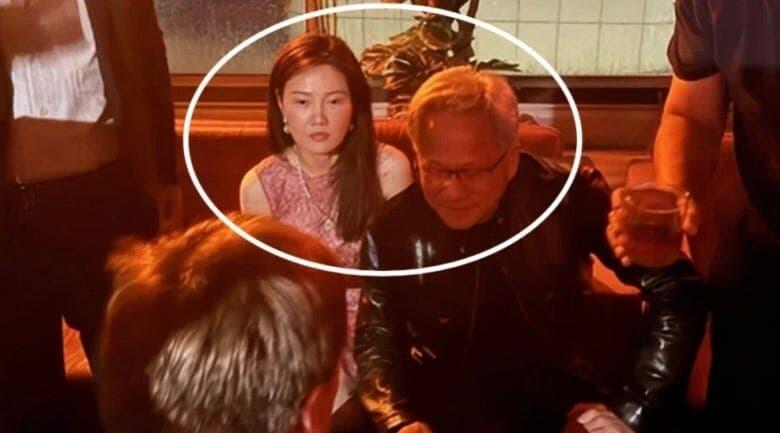
این رابطه تیتر خبرها بود، اما اصل ماجرا تراشهها بودند... دستکم این برداشتی است که اندرو لو، تحلیلگر نیمههادی تایوان، از رسوایی جاسوسی Nvidia (NVDA) ارائه داده و نظرات او به لطف ترجمه Jukan در شبکه اجتماعی X دست به دست میشود. این مطلب تنها چند ساعت پس از آن منتشر شد که جنسن هوانگ به کارکنان...
"A Detonator Set Off Right On Cue": Why Washington Seized On The Jensen Huang Scandal To Draw Its Sword The affair was the headline. The chips were the point...
That, at least, is the read from Taiwanese semiconductor analyst Andrew Lu , whose take on the Nvidia (NVDA) spy scandal has been making the rounds on X courtesy of a translation by Jukan. It landed just hours after Jensen Huang told staff in a memo that " I was unfaithful to my wife " , and Nvidia's board launched an independent investigation into whether its founder was the target of a foreign intelligence effort.
*NVIDIA'S BOARD TO PROBE IF CEO WAS CHINESE INTELLIGENCE TARGET
*NVIDIA CEO JENSEN HUANG ADMITS AFFAIR WITH ALLEGED CHINESE SPY
A quick recap for anyone who spent the past ten days offline. On Oct 29 the New York Times reported that US intelligence had concluded Alice Huang (Huang Le, no relation), a senior executive at Singapore data center operator Megaspeed, was a Ministry of State Security asset with a close relationship to the Nvidia CEO, as we first reported at the time , and that Trump had been briefed a year ago and did nothing. Nvidia called the contacts "not unusual or unexpected." A week later three House GOP chairmen demanded a closed-door briefing on Nov 18, conveniently the day after Nvidia reports earnings. Then on Friday the FT reported the relationship was romantic, and on Sunday Huang confirmed it. So much for "not unusual."
Which brings us to Lu's argument: the scandal is a tool, and Washington just used it to get three things it could not get while Huang was the loudest voice in the room. We reproduce it in full below, with some context from our past coverage.
"The Purpose Of This Scandal Is By No Means To Expose An Affair"
Why the US Seized on the Scandal to Draw Its Sword: Three Strategic Objectives
The purpose of this scandal is by no means to expose an affair. It is to force through three critical objectives that had made no headway in the tech war between the US and China because Jensen Huang opposed them.
The first cut: Completely destroy the legitimacy of Jensen Huang's lobbying against sanctions in Washington
Over the past two years, the loudest and most influential business leader in Silicon Valley opposing a total ban on chip exports to China has been Jensen Huang. He has told the White House the same thing all along: "Cede the Chinese market to Huawei, and the only one that ends up dead is the American tech industry."
But the moment US intelligence labels the woman named as Huang's affair partner "a spy working for China's Ministry of State Security who sought to steer the US toward easing its chip controls," every bit of lobbying he has done for looser controls takes on an entirely different political meaning. It becomes a national security matter, raising the possibility that a foreign spy used a secret relationship to exert influence.
Huang can no longer say a single word in defense of the Chinese market before Congress or the White House. If he does, he will be branded as someone who "fell for an intelligence operation and still hasn't come to his senses."
Some context on just how successful that lobbying was. Huang first talked Trump into reversing the ban on the downgraded H20, and then in December struck the deal to sell the H200, Nvidia's second-most powerful chip, to China with Uncle Sam taking a 25% cut .
NVIDIA TO GIVE US 25% CUT OF H200 CHINA REVENUE: US OFFICIAL
Trump even toyed with letting Blackwell go to China before backing off. And it is worth remembering that, according to the FT, the intelligence memo describing the romance was circulated among top officials shortly before Trump's Beijing summit in May, yet Huang still got a last-minute seat on Air Force One (boarding during a stopover in Alaska) and a seat at the Xi state dinner in September. In other words, the lobbying worked right up until the moment the memo leaked . Funny how that timing works.
The second cut: Reverse the H200 export approvals for China and sever the link between Chinese shell companies and Southeast Asian smuggling networks
On November 8, the very day the Jensen Huang scandal broke, The New York Times published an investigation for which its reporters went in person to dozens of Chinese companies that the US Commerce Department had approved to handle Nvidia's H200 chips. New Matrix in Beijing was one of them. According to the report, the registered addresses of companies approved to buy the chips turned out to be empty "ghost offices," and some of the companies had close ties to entities on US sanctions lists and to firms under contract with the Chinese military.
One exposé says Nvidia's CEO was having an affair with a female spy from Megaspeed, the Singapore company that handled the chip smuggling. The other says the Chinese companies Commerce approved to buy H200s are nothing but shell companies trading on behalf of the Chinese military. The aim of these two reports is clear. They are meant to pressure the Trump administration and the Commerce Department into fully revoking or freezing H200 export approvals for China and, going further, to force a sweeping overhaul of the loophole that let chips be diverted through data centers run by third parties in Singapore and elsewhere in Southeast Asia.
As we detailed on Saturday , New Matrix's listed address in a Beijing industrial park turned out to be an empty shell with wires dangling from the ceiling , and its owners have ties to Wise Road, the PE firm the US blacklisted in 2024. Another approved assembler, Maginfra, also appeared deserted and is believed to be an Inspur offshoot (Inspur is on the entity list for working with the PLA). Not exactly the sort of due diligence one expects for the world's most coveted chip.
As for Southeast Asia, regular readers know this "loophole" has been leaking for a while. Back in March the US charged Super Micro's co-founder in an alleged $2.5 billion Nvidia chip smuggling scheme , and in May Bloomberg traced part of it to a Bangkok company, making Thailand a possible hub for chips headed to Alibaba . Megaspeed itself rents data center capacity in the region to, you guessed it, Alibaba. All of which makes Nvidia's response from last December age like milk:
The third cut: Put Nvidia on a national security leash through congressional oversight and an independent investigation
As the world's largest company by market cap and the dominant force in AI, Nvidia has until now enjoyed broad autonomy in how it runs its business. But in the wake of this incident, the three congressional committees responsible for China, foreign affairs, and intelligence have begun examining Nvidia's internal security measures directly. They have even pressured Nvidia's board into forming an independent investigation committee to look into the company's own founder and CEO.
In effect, Washington's national security establishment has planted a watchdog right inside Nvidia's board. From now on, the goal is to make sure that everything, down to where each and every one of Nvidia's high performance chips ends up, conforms strictly to US national security strategy. It also means there is no more room for skirting the edge of the rules or releasing chips with specs specially tailored to regulatory thresholds.
The board, for its part, says it has " no reason to believe that either national security or NVIDIA secrets were compromised " and still has "confidence in Jensen." Which is exactly what boards say right before the outside counsel starts reading emails. Meanwhile there is no public succession plan and no obvious heir to the 63-year-old Huang, and as QTR asked earlier today, could the scandal force him to resign? For a stock where the CEO is the brand, that is a lot of key-man risk to price in a week.
"The scandal was a detonator set off right on cue. The real goal was to plug the holes chips were leaking through."
Jensen Huang made the fatal mistake of letting his guard down in his private life and personal relationships. In the end, he fell into a honey trap, the textbook tactic of intelligence warfare, and was compromised. America's national security and intelligence agencies ruthlessly exploited the weakness his private life had exposed. As a result, they solved three thorny problems in a single stroke: Nvidia's lobbying at the White House to ease restrictions on China, the flow of H200 chips into Chinese shell companies, and smuggling routed through Singapore.
The closed congressional hearing set for November 18 will be the decisive turning point at which the US moves in earnest to tighten its sanctions on China's AI compute even further.
Lu's thesis has the virtue of explaining the timing: an intelligence finding that sat on desks for a year (and through a Beijing summit) suddenly surfacing in the NYT, then the FT, then Congress, all within ten days and right into Nvidia's earnings. One could argue the opposite, of course (an administration that knew and shrugged is hardly a sword-wielding one), and China has barely taken delivery of any H200s anyway (as of May, reportedly not a single one had shipped to the approved buyers). But whoever pulled the pin, the result is the same : the most effective lobbyist for selling AI chips to China has lost his voice , probably for good.
And that matters for more than Huang's marriage. As we noted on Nov 1 , the entire market is already leaning on Nvidia's Nov 17 report; with the stock already off from its nearly $5.8 trillion October peak to below $5 trillion, investors now get earnings on Tuesday the 17th and a closed-door grilling on Wednesday the 18th. If Lu is right, the second date matters more, because what comes out of it is likely to be tighter controls, not looser ones. China revenue was always the upside option in the bull case. It now looks like the first casualty.
Taiwanese semiconductor analyst Andrew Lu’s take on the recent scandal involving Jensen Huang:
Why the US Seized on the Scandal to Draw Its Sword: Three Strategic Objectives
منبع: ZeroHedge — متن کامل از فید رسمی منبع، با ترجمهی ماشینی عنوان و خلاصه