WTI پس از افزایش شدید ذخایر نفت خام و رکورد تولید، زیانهای خود را افزایش داد؛ و حملات به نفتکشها را نادیده گرفت
WTI پس از افزایش شدید ذخایر نفت خام و رکورد تولید، زیانهای خود را افزایش داد؛ و حملات به نفتکشها را نادیده گرفت. قیمت نفت بدون دلیل موجهی در حال سقوط است (که به طرز عجیبی به طور همزمان در بسیاری از کلاسهای دارایی در زمان باز شدن بازار سهام ایالات متحده آغاز شد) و رشد اولیه قیمت را که ناشی از حملات بیشتر به نفتکشها در خاورمیانه و تخریب پالایشگاهها در روسیه بود، پاک کرد. همانطور که در انتهای این یادداشت بحث میکنیم، به نظر میرسد معاملهگران...
WTI Extends Losses After Big Crude Build, Record Production; Shrugs Off Tanker Attacks Oil prices are tumbling for no good reason (oddly triggered simultaneously across many asset-classes at the US equity cash open), erasing morning gains driven by yet more tankers coming under attack in the MidEast and refineries wrecked in Russia. As we discuss at the end of this note, it appears traders are eying a new regime in crude trading.
"Further disruptions around the Strait of Hormuz remain an important upside risk, but rising OPEC+ output, resilient Russian exports and building U.S. inventories point to a more comfortable supply picture," analysts at ING say.
"We continue to expect the oil balance to loosen as supply recovers, limiting the scope for a sustained rebound in prices."
Oil prices had slipped lower yesterday evening on the back of sizable builds reported by API, now to see if the official data backs that up...
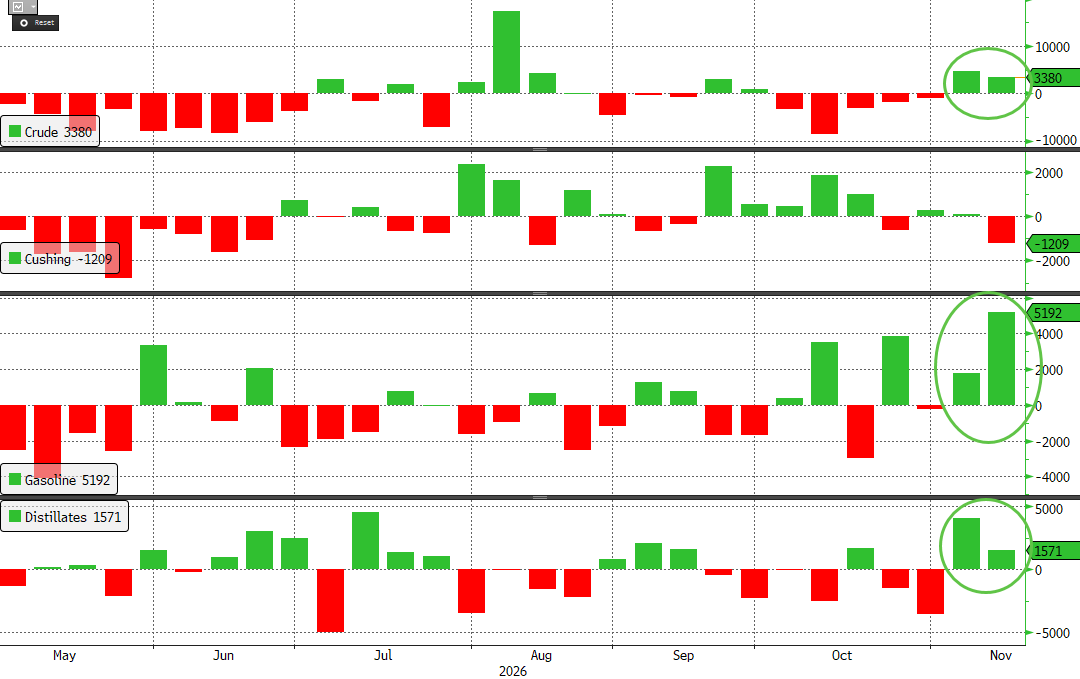
While not as large as API, the official data did confirm a second weekly build in crude stocks and a very large rise in gasoline inventories (biggest since January) as Cushing drew back down towards 'tank bottoms'...
The SPR saw another large draw (3.174mm barrels - the most since August)...
Despite the big build, total US Distillates stocks remain at record lows for this time of year...
US Crude production rose to a new record high as the rig county continues to climb...
WTI was hovering around $83 ahead of the official print and extended losses after the big build and production jump...
The past two sessions sum up the new regime. Brent lost over 3% on Monday as signs of recovery in the flow of oil in the Strait of Hormuz increased expectations of a supply surplus. That happened even though Iran attacked a US base in Bahrain and claimed more Hormuz mine strikes. A year ago, that headline alone would have put $5 on the barrel.
Now the market is looking past the explosions to the balances, and those have turned. The IEA now sees supply exceeding demand by 1.7 million barrels per day in Q4, and observed global inventories rose 52 million barrels, the first monthly increase since June. Last night’s API added to it, with U.S. crude stocks up 5.3 million barrels in the week ending Nov 13, after a 9 million barrel build the week before.
The less discussed half of the story is demand. Consumption destroyed at $130 crude isn’t coming back just because Brent is in the low $90s. The IEA sees world oil demand falling by 2.7 mb/d in 2026, to 102.3 mb/d, and even next year’s rebound is mostly petrochemicals, while high prices, electrification and fuel efficiency in the global vehicle fleet dampen the rebound in road fuels demand.
In other words, the war pulled forward some structural demand loss that won’t come back. That said, the bears may be getting ahead of themselves on supply. Dated Brent is still $22/bbl above pre-war levels. Iraq is trucking oil via Syria, which suggests its flows are not yet back to pre-war levels, and LSEG warns that normalization of Hormuz flows “is still not possible under current conditions.”
With Brent down 21% this month and shorts piling in, one confirmed tanker loss in the Strait could cause a short squeeze much bigger than the fundamentals justify. Demand is the slow, structural force here and supply is the fast, headline-driven one. For now the market is betting on demand, but bets on Hormuz have been wrong before.
منبع: ZeroHedge — متن کامل از فید رسمی منبع، با ترجمهی ماشینی عنوان و خلاصه
گفتوگو