اقتصاد ایالات متحده در سه ماهه سوم با رشد ۳.۴ درصدی، به لطف هزینههای سنگین سرمایهای هوش مصنوعی، سریعترین سرعت رشد یک سال اخیر را ثبت کرد
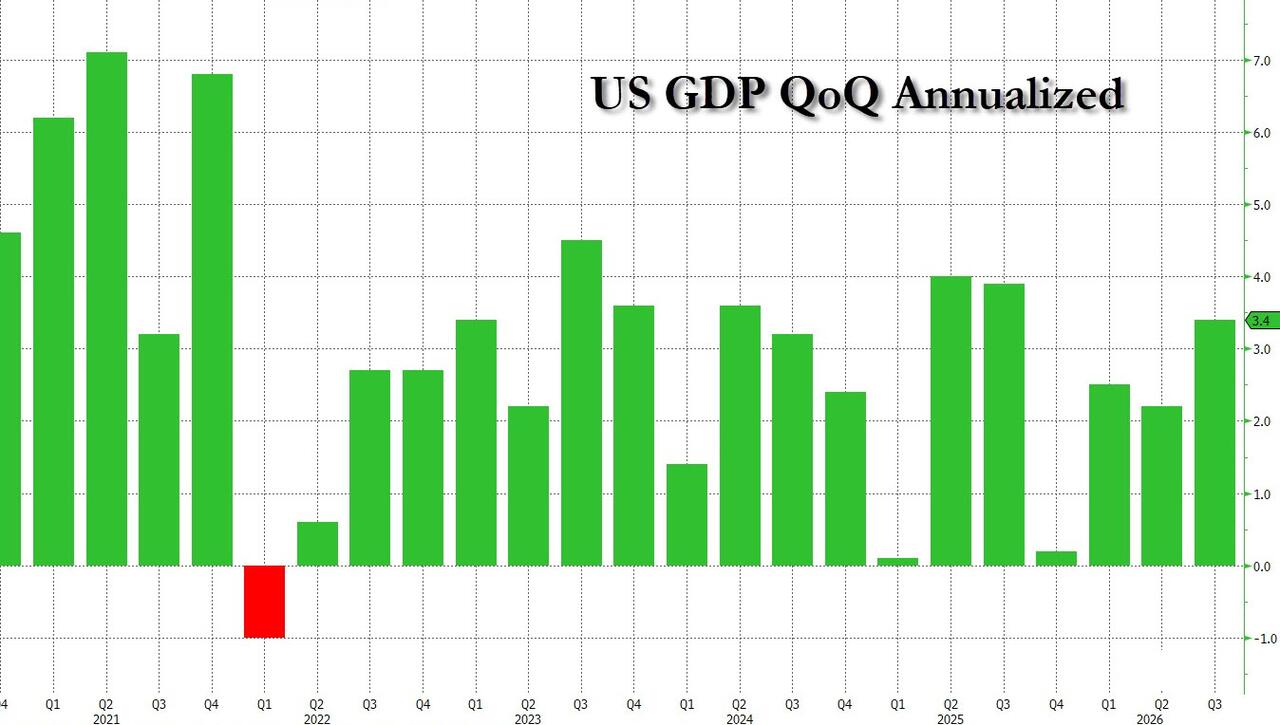
اقتصاد ایالات متحده در سه ماهه سوم به لطف هزینههای سرمایهای سنگین و مبتنی بر بدهی در حوزه هوش مصنوعی و مصرفکننده انعطافپذیر آمریکایی، با سریعترین سرعت در یک سال گذشته رشد کرد. تولید ناخالص داخلی واقعی (تعدیلشده بر اساس تورم) در سه ماه منتهی به سپتامبر، پس از رشد ۲.۲ درصدی در دوره قبل، با نرخ سالانه ۳.۴ درصد افزایش یافت.
US Economy Grows 3.4% In Q3, Fastest Pace In A Year, Supercharged By Massive AI Capex Spending The US economy grew in the third quarter at the fastest pace in a year, supercharged by the debt-funded AI capex spending spree and a resilient American consumer.
Real Gross domestic product (adjusted for inflation) increased an annualized 3.4% in the three months through September after growing 2.2% in the second quarter, according to the initial estimate by the Bureau of Economic Analysis. The rise in GDP beat the 3.2% median projection in a Bloomberg survey of economists.
Real final sales to private domestic purchasers - a closely watched metric that combines consumer spending and fixed private investment - rose 4.9% in the third quarter, up from 4.6%. Government spending also increased, largely reflecting oil sales from the Strategic Petroleum Reserve. Higher imports, which count as a negative in calculating GDP, offset some of the gains.
While personal spending came in stronger than expected, rising an annualized 3.8%, above estimates of a 3.4% print, the biggest driver behind the world’s largest economy continued to be relentless business spending (which has resulted in a massive debt bubble to go along the AI stock bubble). Outlays for equipment contributed more to GDP in the third quarter than at any time since 2011 outside of the pandemic rebound.
Household spending was similarly robust, increasing an annualized 3.8% for a second straight quarter, even amid historically low consumer sentiment tied to cost-of-living concerns.
“It looks like a strong quarter driven by domestic demand activities and a drag from trade,” said Eric Winograd, senior economist for fixed income at AllianceBernstein. “We talk about the boost to growth from AI, but a lot of that stuff is imported.”
Meanwhile, separate figures from the agency showed inflationary pressures mounted at the end of the quarter. The personal consumption expenditures price index - the Fed's preferred measure - rose 0.5% in September, the most in six months. Excluding food and energy, the so-called core gauge advanced 0.3%; both were in line with estimates.
Federal Reserve chair Kevin Warsh said on Wednesday after the central bank held rates steady that “economic growth has strengthened” as he hailed “healthy” consumer spending and capital expenditures that he said were at a “historically high share of GDP”.
The GDP report is the last major reading on the health of the US economy before next week’s midterm elections, whose results will determine who controls Congress for President Donald Trump’s final two years in office, with many campaigns targeting concerns around affordability and high prices.
خبرهای مشابهی در منابع دیگر هست، ولی داور خودکار هنوز همخوانیشان را بررسی نکرده است.
همین رویداد در منابع دیگر:
- بر اساس دادههای تولید ناخالص داخلی سه ماهه سوم، اقتصاد ایالات متحده با سریعترین سرعت در نزدیک به سه سال گذشته رشد کرد
- اقتصاد ایالات متحده در سه ماهه سوم ۳.۴ درصد رشد کرد در حالی که ۳.۲ درصد پیشبینی شده بود
- فراتر از پیشبینیها؛ اقتصاد آمریکا در سه ماهه سوم با نرخ ۳.۴ درصد رشد کرد
- رشد اقتصادی ایالات متحده در سه ماهه سوم شتاب گرفت
- رشد ۳.۴ درصدی و بهتر از حد انتظار تولید ناخالص داخلی آمریکا در سه ماهه سوم با شتاب گرفتن تورم سپتامبر
- پیشبینی میشود تولید ناخالص داخلی ایالات متحده در سه ماهه سوم 3.2 درصد رشد کند
منبع: ZeroHedge — متن کامل از فید رسمی منبع، با ترجمهی ماشینی عنوان و خلاصه