«همه آنها در ته دریا خواهند بود»: ترامپ ایران را به اعزام کاروان ۱۴ تانکری از طریق محاصره دریایی ترغیب کرد
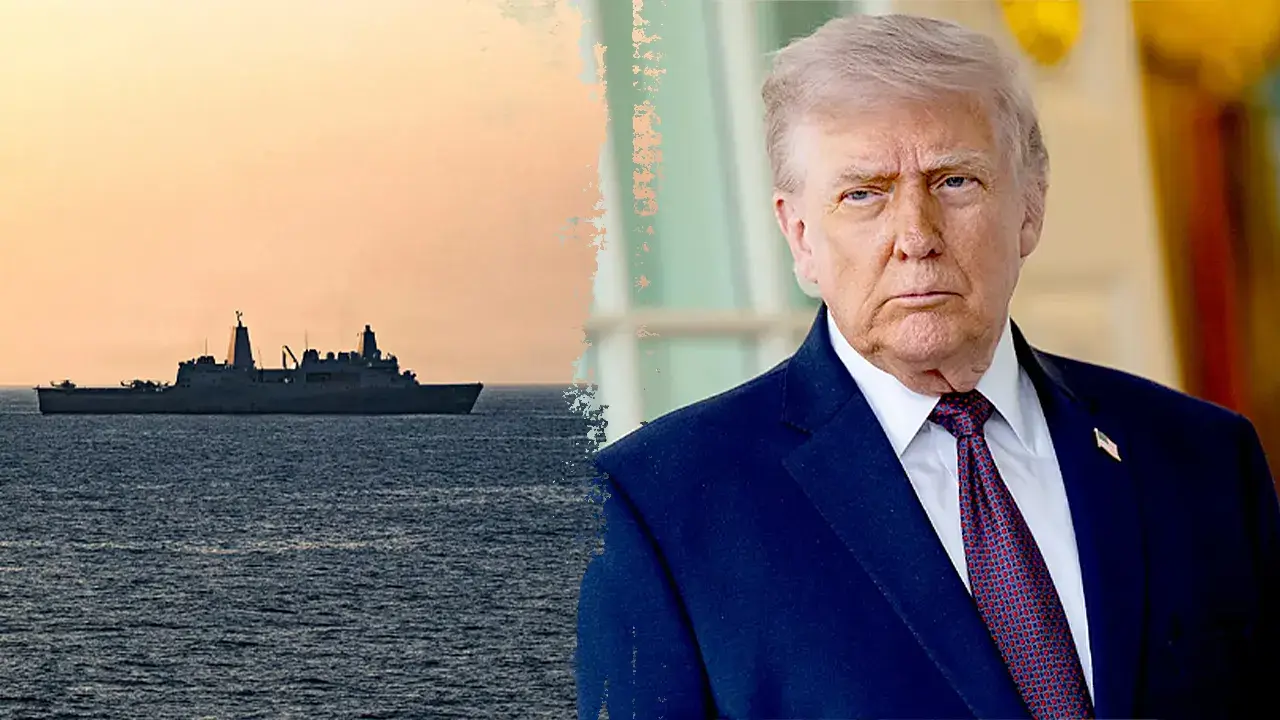
«محاصره باید شکسته شود...» رئیسجمهور ترامپ روز یکشنبه ایران را به چالش کشید تا با یک کاروان گزارششده از ۱۴ نفتکش، محاصره دریایی ایالات متحده بر روی بنادر خود را بشکند.
"They'll All Be At The Bottom Of The Sea": Trump Dares Iran To Send 14-Tanker Convoy Through Blockade "The blockade must be broken..."
President Trump on Sunday dared Iran to run the US naval blockade of its ports with a reported convoy of 14 oil tankers. Asked by Fox News whether Tehran would try to breach the blockade, Trump said: "I hope they do, they'll all be at the bottom of the sea like the rest of the navy."
President Trump told Fox News he's inclined to resume strikes against Iran after the new year.
The President responded to reports of Iran planning to test the U.S. naval blockade.
"I hope they do, they'll all be at the bottom of the sea like the rest of the navy." pic.twitter.com/wziCX97eRL
Trump also told Fox chief foreign correspondent Trey Yingst that he is inclined to resume strikes on Iran after the new year if no deal is reached , Yingst reported from Tel Aviv. Talks are still going on indirectly, Trump said, but he called Iran's negotiators "professional tap dancers" whose talk is "all BS," and he urged Iranians protesting the regime to keep going.
Trump had been vaguer on Thursday, when he told Axios "we will see what happens after the beginning of the year," and a week ago he told advisers he would not escalate unless Iran or the Houthis provoked him. Two US carrier strike groups are now operating in the Arabian Sea, Yingst said.
The convoy claim surfaced Nov. 20, when Hamshahri, a Tehran municipality-affiliated outlet, reported that Iran had staged 14 tankers at Kharg Island, the terminal that handles roughly 85% to 90% of its crude exports, to run the blockade. Euronews' Persian service, citing satellite imagery and ship-tracking data, reported more than 14 tankers gathered at the island with crews assigned and Iranian flags raised, set to sail in convoy toward the Gulf of Oman in the coming days.
The Institute for the Study of War and AEI's Critical Threats Project assessed the same day that "Iran will likely attempt to run the US naval blockade in the coming days" because its economic situation is "increasingly dire." Running it, the analysts wrote, "would expose Iran to significant risk that ranges from the destruction of a tanker fleet at minimum to possibly resuming a larger-scale conflict with the United States, or both."
Foreign Minister Abbas Araghchi said Friday that "the blockade must be broken," even as he insisted Tehran still sees a path to a deal, and on Saturday Deputy Foreign Minister Kazem Gharibabadi called the blockade "an act of war," vowing that Iran "will take any necessary measures to break this economic siege," Euronews reported. The IRGC-linked Fars News Agency went further on Nov. 18, arguing that Iran should dispatch a tanker convoy publicly and hit back at regional energy and technology infrastructure if US forces interdict it.
TankerTrackers, which follows Iranian oil shipments by satellite, called a tanker that MarineTraffic data appeared to show moving through the Strait of Hormuz on Sunday a "spoof" that does not exist , saying "there's nothing on satellite imagery" to back the transmission, according to Euronews. Charlie Brown, a senior adviser to United Against Nuclear Iran, told Fox News Digital the 14-ship plan is "farcical" and "most likely propaganda," adding that satellite monitoring has shown no significant loading at Kharg "in quite some time."
On Sunday evening the UK Maritime Trade Operations center (UKMTO) said it had received a report of an incident involving a tanker and military forces in the Gulf of Oman, without naming the vessel. Euronews placed the incident east of the Strait of Hormuz, off the Iranian port of Chabahar, and Iranian media separately reported two supertankers ablaze after hitting mines in a "restricted area" east of the strait.
Click here to view the full product⤵️ https://t.co/RPHUPQ3p7O #MaritimeSecurity #MarSec pic.twitter.com/F5bMg4sOMW
The blockade hit 130 consecutive days on Saturday, and US Central Command says it is keeping the IRGC from exporting "billions of dollars in crude oil." On Nov. 18 the Joint Maritime Information Center extended it to ships that take on Iranian cargo through ship-to-ship transfers at sea. China's independent refiners have already turned to Iraqi crude , and Secretary of State Marco Rubio said on Nov. 11 that Iran would have to make a deal: "Eventually, you have to eat."
Today marks 130 consecutive days of America's blockade against Iran. U.S. service members are enforcing the blockade with exceptional focus, determination, and professionalism - preventing Iran's Islamic Revolutionary Guard Corps from exporting billions of dollars in crude oil. pic.twitter.com/d2BKzEZkIn
Iran's Revolutionary Guards claimed strikes on two US bases in Bahrain on Saturday night, and Yingst said further attacks on tankers near Hormuz had been reported in the hour before his report. The ISW analysts drew their own conclusion from the convoy talk: "Iran's willingness to accept these risks demonstrates the degree to which the regime views the current economic situation as both dire and unsustainable."
منبع: ZeroHedge — متن کامل از فید رسمی منبع، با ترجمهی ماشینی عنوان و خلاصه
گفتوگو