گزارشها حاکی از آن است که TSMC در میان نگرانیهای تامین مالی دایرهای، پول نقد پیش از موعد از مشتریان تراشههای هوش مصنوعی مطالبه میکند
در صورت تایید، این اقدام نشانه احتیاط این شرکت نسبت به وضعیت مالی مشتریان هوش مصنوعی خواهد بود؛ شرکتی که روشنترین دید را نسبت به تقاضای تراشه دارد. این موضوع به بحث تامین مالی دایرهای که این ماه بر سهام هوش مصنوعی سایه افکنده بود، وزن بیشتری میبخشد. طراحان تراشه سفارشی و بازیگران کوچکتر هوش مصنوعی با ترازنامههای تحت فشار، با جریان نقدی محدودتری روبرو خواهند شد و ممکن است ظرفیت خود را به رقبا با بودجه بهتر ببازند.
If confirmed, the move would be a vote of caution about AI customer finances from the company with the clearest view of chip demand. That would add weight to the circular financing debate that has hung over AI stocks this month. Custom chip designers and smaller AI players with stretched balance sheets would face tighter cash flow and could lose capacity to better-funded rivals. For TSMC, the policy would strengthen its pricing power and reduce its credit risk, a positive for the stock and for Taiwan’s tech-heavy market. Watch for any confirmation or denial from TSMC, which would set how seriously the report is taken.
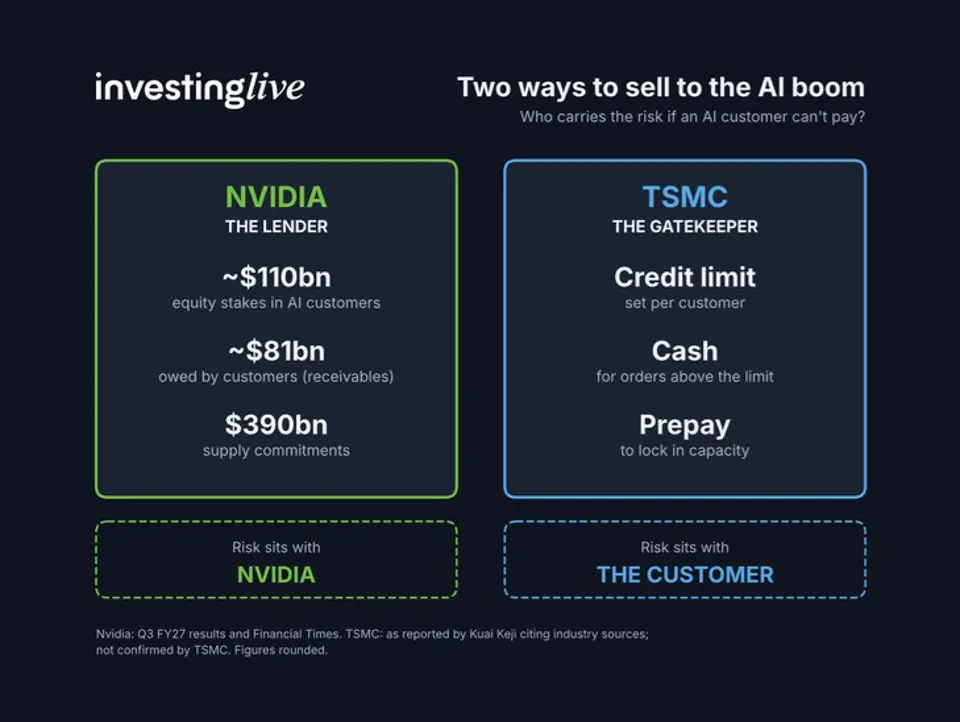
While Nvidia extends credit to the AI boom, TSMC is reportedly asking its customers to show the money first, and that difference says a lot about who carries the risk.
TSMC is reportedly setting credit limits for customers based on their balance sheets, payment history and default risk
Orders above the limit must reportedly be paid in cash, and some customers must prepay to secure capacity
The policy mainly affects custom AI chip makers, several of which are raising money through bonds, equity and loans
The report links the change to concerns about circular financing in AI
TSMC has not announced the policy, and the outlet could not confirm it independently
TSMC has begun weighing customers’ finances before handing out chipmaking capacity, setting credit limits and asking some buyers to pay cash up front, Chinese technology outlet Kuai Keji reported, citing industry sources. TSMC has not announced the policy, and the outlet said it could not independently confirm it.
Taiwan Semiconductor Manufacturing Co, or TSMC, is the world’s largest contract chipmaker. It does not design its own chips. Instead, it manufactures them for companies such as Nvidia, Apple, AMD and the growing number of firms building custom AI processors. Founded in Hsinchu in 1987, it produces the vast majority of the world’s most advanced chips. That gives it near-monopoly control of the capacity every AI company needs, and that leverage is what lets it set terms on who gets served first.
According to the report, TSMC now sets a credit limit for each customer based on its balance sheet. The assessment reportedly covers any history of late or unpaid bills, the customer’s standing in the industry, its business outlook and the estimated loss if it defaulted. Orders above that limit must be paid in cash, and some customers must prepay to secure their allocated capacity. The change is said to apply mainly to makers of custom AI chips, several of which are raising money through overseas convertible bonds, equity sales and syndicated bank loans.
The report links the shift directly to concerns about circular financing in the AI industry, where companies invest in one another and then buy from each other. In effect, TSMC would be moving from allocating capacity on a first-come, first-served basis to asking customers to prove they can pay.
That fits with comments from chief executive C.C. Wei, who has said on an earnings call that capacity planning takes into account cloud providers’ capital spending, their financial condition, and the availability of power and components. TSMC has also sent staff to the United States to check on data centre construction. The company already holds large customer prepayments, around NT$234 billion at the end of June, although Kuai Keji noted these are standard accounting prepayments rather than the new credit system.
The contrast with Nvidia is striking. Nvidia is increasingly acting as a financier of the AI build-out, with commitments of about $518 billion and customer receivables of about $81 billion, according to its latest results and a Financial Times report. TSMC, sitting further up the supply chain with near-monopoly control of advanced chipmaking, appears to be heading the other way, shifting risk back onto its customers.
If confirmed, the policy would tighten cash flow for chip designers that already tie up large sums in design and packaging costs, and it would favour well-funded customers over smaller players. It would also be a sign that the company best placed to judge AI demand wants protection in case some of its customers cannot pay.
This article was written by Eamonn Sheridan at investinglive.com.
منبع: ForexLive — متن کامل از فید رسمی منبع، با ترجمهی ماشینی عنوان و خلاصه
گفتوگو