Japan’s trade deficit comes in at half the expected size as exports jump 20.5%
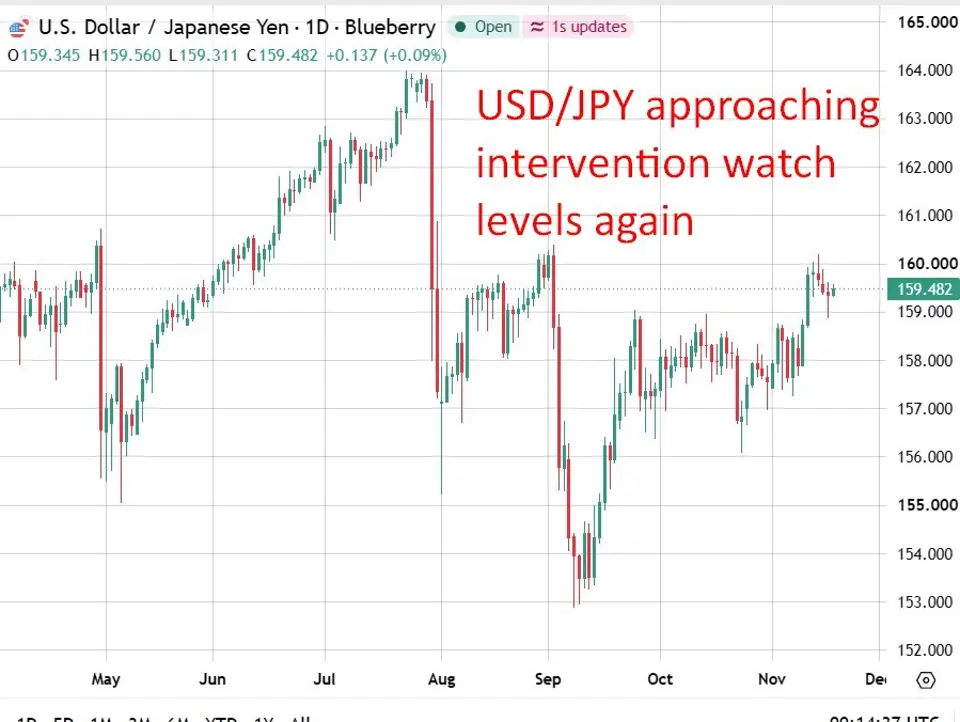
The narrower deficit is mildly supportive for the yen because it reduces the yen sold to pay for imports. Rate differentials still dominate, though, and USD/JPY remains pinned near 160 while the Fed is on a hiking path. Oil is the key swing factor: Japan’s import bill is highly sensitive to crude prices during the Iran war, so any renewed rise in oil would quickly reverse today’s improvement. For the BOJ, the data adds to evidence that the economy can absorb a December hike, which could nudge short-end JGB yields higher. Exporters with heavy chip exposure should find support in Tokyo trade.
Chips lifted Japan’s exports and a lighter import bill halved the expected trade gap, but the yen is still taking its cue from Washington, not Tokyo.
Exports rose 20.5% y/y in October, against forecasts of about 20% and September’s revised 16.5%
Imports rose 21.6%, against forecasts of about 26% and a revised 18.5%
The trade deficit was around ¥477 billion, against an expected deficit of about ¥1 trillion
The seasonally adjusted deficit was around ¥767 billion, against forecasts of about ¥908 billion
The BOJ is widely expected to raise rates from 1.25% in December
USD/JPY is trading around 159.5, close to 160, where Tokyo has warned about intervention
Japan’s exports rose 20.5% in October from a year earlier, slightly ahead of expectations and a clear pick-up from September’s revised 16.5%, Ministry of Finance data showed on Wednesday. Chip shipments led the gain, ending a two-month slowdown in export growth.
Imports rose 21.6%, well short of forecasts of about 26%, after an 18.5% rise in September. As a result, the trade deficit came in at around ¥477 billion. That was roughly half the ¥1 trillion or so analysts had expected and narrower than September’s revised ¥557 billion. On a seasonally adjusted basis, the deficit was around ¥767 billion, smaller than forecast but wider than the previous month.
The import figure is the surprise. The government had said crude procurement would recover in October to around year-earlier levels as tankers routed through the Suez Canal arrived, so a bigger jump in the import bill was widely expected. Energy is Japan’s main vulnerability in the Iran war. The country imports close to 90% of its energy, and high oil prices have kept its import bill elevated.
The data adds a modest tailwind to the Bank of Japan’s case for raising rates in December. The central bank held its policy rate at 1.25% in October, but Governor Kazuo Ueda signalled strong prospects for a hike at the next meeting after declaring that underlying inflation had reached the 2% target. Board member Hajime Takata said this week that rates should rise nimbly. Solid exports help offset a slight contraction in third-quarter GDP, and a narrower trade deficit means fewer yen are being sold to pay for imports.
That may not be enough to lift the yen on its own. USD/JPY is trading around 159.5, just below the 160 level where Tokyo has stepped up warnings about intervention. With the Federal Reserve on a hiking path and US 10-year yields above 5%, the rate gap still works against the yen even if the Bank of Japan hikes. The 10-year JGB yield is near 2.9%, close to its highest since late October.
The next test is Friday’s national inflation data. A firm reading alongside today’s trade figures would strengthen expectations for a December move. A rise in oil prices, on the other hand, would quickly push the import bill and the deficit back up.
This article was written by Eamonn Sheridan at investinglive.com.
منبع: ForexLive — متن کامل از فید رسمی منبع، با ترجمهی ماشینی عنوان و خلاصه
گفتوگو